Tuesday, June 19, 2007

Zambia in the Green Season

Africa Tour Consultant Anna Flood recently travelled to Zambia in the Green Season.

For the discerning African traveller, Zambia has it all: national parks teeming with wildlife, historical manor houses built in the 1920s, and one of the seven natural wonders of the world, Victoria Falls. What’s more, it is possible to see all of this in an unforgettable two weeks that will leave you hungry to come back for more.

Walking gingerly across a dry riverbed trying not to disturb a lone bull elephant was one of the most exhilarating bush experiences I have ever had. Robin Pope runs a series of ‘Mobile Safaris’ guided by Debs and her team. They are not only exciting, engaging and enjoyable, but also incredibly comfortable. Leaving the car behind means you are one step closer to the animals and to understanding what life in the bush is like.

All the main Robin Pope camps are exquisite in their own way: the opulence of Luangwa House; the history at Nsefu (the very first camp in the park); and the superb tented Tena Tena. The attention to detail, the staff and the superb settings over the Luangwa River are second to none. Despite this, camping by a dry riverbed and sitting round the fire talking to Debs about her life and the park was definitely the highlight for me. The tents are spacious and, with a hot shower and proper facilities, it is a far cry from the images camping usually conjure up. The walking is easy going, the guiding faultless and, with tea-breaks and the knowledge of a back-up vehicle on the end of a radio should you get tired, everything is taken care of.

South Luangwa is famous for, amongst other things, its high concentration of leopard. If you are in search of this elusive cat, this is the place to go. The BBC did not spend two years here filming a leopard documentary for nothing. Even in the lush green season when these cats are much harder to spot, we had two excellent sightings and saw evidence of much more activity in all areas of the park. Watching this incredible predator slink her way through the grasslands was mesmerising. The movement of her body was so fluid and graceful and the balance of the long tail is quite incredible - my first leopard is a moment I shall never forget.

Leaving behind Robin Pope, I set off to John Coppingers camp, Tafika, in the far northern section of the park. John and his wife run a great camp; here you really get a sense of going back to nature. The accommodation is constructed from locally-sourced reed and thatch huts that John and his team re-build ever year, and along with that come a few natural friends. All beds are covered by mosquito nets to stop any creepy-crawlies getting too close for comfort. Occupying another majestical river setting, it was sometimes hard to drag myself away from the strategically placed sun loungers scattered around the grounds.

The quality of the kitchen’s garden and chef was evident at every meal as we were spoilt with homegrown vegetables, freshly made quiches and desserts. You really get a sense of community involvement in the camp - John’s hard work over the years has evidently paid off. Another of Takifa’s attractions is John’s micro-light. He will take you out to see the bush from a different perspective. Swooping down over the Luangwa River is the one time you will witness the mighty crocodile running for cover, and to see the game from above is a truly memorable experience.

I left South Luangwa and headed north to Shiwa Ng’andu. Shiwa is an English Country Manor in deepest darkest Zambia. It tells the story of one man, his love and his struggle to create his dream in Africa. In the 1920s, Sir Stewart Gore-Browne began creating this estate and by 1935 it was a thriving lifeline for the local community. Unfortunately, Gore-Browne’s life was not the fairy tale he had wished for, and over time the house fell into disrepair due to tragic circumstances. Today, however, the dream is alive once more, as his wife Jo and grandson Charlie have taken over management of the estate.
With the monumental task of rebuilding the manor, you cannot help but admire the determination and energy of these two people. In a house large enough to have 27 fireplaces and several wings, the work will keep them busy for years to come. They are re-building dilapidated parts of the house using the original method: by hand making all the bricks on the estate. It is really is an incredible place with a thousand stories to tell and, thanks to the work of Charlie and Jo, Shiwa once again has a bright future. We climbed one of the peaks behind the house that Livingstone climbed when he first arrived in Zambia. Seeing the bush stretching out below I realised why Gore Browne fell in love with this part of the world and made it his home.

Leaving this incredible piece of history we flew down to Victoria Falls, ‘The Smoke That Thunders’. You will never truly be able to understand this phrase until you see this monumental sight for your selves. As we approached, our pilot flew over the falls for us and we could see the snake-like rock formation that has been produced over thousands of years of erosion. The sheer power of the water forces its way through the weakest parts of the rock, and ends in this mighty drop.

I stayed at Tongabezi, where the contrast to the falls is quite striking. The calmness and tranquillity of the Zambezi River, gently meandering down to the falls, is a stark contrast to the frenetic activity and movement of the water further downstream. Sitting on the veranda of the garden cottage, or dining on the deck by the river’s edge, it is hard to imagine that further downstream 500 million litres of water are crashing down a 108 metre gorge every second. With numerous activities available, such as sunset cruises, island dining and trips to Mosi-os-Tunya Game Park as well as more adrenaline filled ones, you can choose to be as relaxed or as active as the river, depending on your mood.

Cox & Kings offers the following options in Zambia, which use Robin Pope camps in the South Luangwa: Zambia: A Robin Pope Safari, Classic Zambia: Two Rivers Safari and Zambia & Lake Malawi. Cox & Kings can also arrange tailor-made tours throughout Zambia.

Tuesday, June 05, 2007

Green Guyana

Online Marketing Executive Michael Pullman travelled to Guyana, a country that welcomes just 2000 tourists per year, and found a developing destination that is challenging but rewarding to those with a keen sense of adventure.

I travelled to Guyana recently with a small group of tour operators on a familiarisation trip and found a clean, welcoming country rich in wildlife and with a variety of stunning landscapes. However, what impressed me most was the way tourism was developing. Many people have jumped on the eco-tourism bandwagon recently, to the extent where the label has become almost meaningless, but not in Guyana: nearly all the lodges we stayed in were built from locally sourced materials, run in co-operation with local communities and serving locally-grown produce, ensuring not only that tourism has a minimal environmental impact but also that local communities reap the benefits. Whilst the accommodation in some areas is basic, and you may have to share it with the odd creature (one night one of our group had a large spider, a bird and a frog as room-mates) the pristine rainforests, colourful wildlife and beautiful scenery more than make up for this.

In the centre of Guyana lies the Iwokrama Forest, which covers 1 million acres of rainforest, and which was granted as a gift to the international community by the President of Guyana in 1989. Administered by a collection of international forestry agencies, the Iwokrama Rainforest is a living model showing how tropical rainforests can be conserved and sustainability used to provide ecological, social and economic benefits to all. There is very little logging in Guyana, the region has a healthy jaguar population, and with the tourism industry developing slowly and responsibly Guyana is something of a model for eco-tourism

So knowing you can come here with a clean conscience and be sure your tourist dollars are making a difference, here are some of the highlights of my trip:

The Giant River Otters at Karanambu Ranch. Karanambu Ranch is the home of Diane McTurk, well known for her work rehabilitating orphaned Giant River Otters before releasing them to the wild. Guests can sometimes swim with the otters, although we decided not to take our chances with the four resident otters when we visited (below).


An evening boat trip on the Rupununi River. The owners of Karanambu Ranch look after their guests very well; after a lunch of Moussaka and apple crumble (the sweet puddings of Guyana are a hangover from the British colonial era) we headed out for an afternoon boat trip on the Rupununi. The river is home to magnificent birdlife but the highlight for me was the covering of giant lily pads, which you can observe flowering as dusk falls. We watched this nature show with generous amounts of rum punch, made by our onboard barman, before heading back to the ranch under a blanket of the clearest stars I have ever seen.

Kaieteur Falls: In the two hours we toured Kaieteur Falls we saw three other tourists. The Falls are spectacular in scale, the largest single drop falls in the world, but unlike most major waterfalls there is no souvenir shop, café, or even handrail separating the tourist from the flowing water.


Surama Village: The fact that Guyana is English-speaking means visitors can really interact with the locals. At Surama we visited the primary school where we took part in perhaps the largest hokey cokey Guyana has ever seen, after listening to the students sing a song about Surama (see below).


Rock View Lodge: Rock View Lodge has plenty of obvious assets: The refreshing swimming pool; the extensive vegetable gardens providing fresh ingredients for the fantastic food; the warm and friendly staff; the range of activities on offer; and the magnificent setting where the savannah meets the jungle. What I liked above all was the fact that Rock View is a focal point of the charming villages surrounding the lodge. Schoolchildren pass by on their way to school. Locals drink in the lodge’s Dakota Bar. Whilst here I took a ten minute walk to the charming village of Annai and watched an inter-village football game take place against a stunning setting on the plains of the savannah.

Becoming a twitcher
: I’m not about to start spending weekends in hides birdwatching in the UK, but I couldn’t help but become interested in the colourful birds of Guyana, and by the end I knew my yellow rump from my white throated toucans (left).

Wally Prince: Our guide at Iwokrama Field Station, Wally Prince, responding to our calls for a closer look at a three-foot cayman by fishing it out of the water with his bare hands during a night time boat trip.

The Trip: Visit Guyana on our 11-night Guyana Experience tour. For more information on Guyana visit Wilderness Explorers, our agents in Guyana.

Thursday, May 31, 2007

New Petra Blog

Those of you who have either visited or are planning to visit the breathtaking site of Petra in Jordan may be interested in ...this blog... from the Jordan Tourism Board. We like it because it is more entertaining than many Tourist Board blogs, and it is a must visit for anyone who has been or is planning to go to Petra.

Friday, May 25, 2007

Before the Incas

Latin America Tour Consultant Marie-Louisa Lowther recently travelled to Peru and discovered there is more to the country’s ancient cultures than the Incas.

My second trip to Peru was a real eye opener. Apart from the fact that this time around I was travelling in style as opposed to living on a shoestring, I also visited some little known places that made me realise that there is so much more to the ancient cultures of Peru than Machu Picchu.

Being the most recent culture before the Spanish invaded, the achievements of the Incas, whilst awe-inspiring, are fairly well-documented compared to some of the pre-Inca civilisations. In fact, very little is known to the outside world about the ten or more centuries that preceded these people: the time of the great Mochita and Chimu cultures.

Peru's northern coast is home to some of the country's greatest archaeological treasures, which were built by the highly skilled pre-Inca people who once thrived in the region.

The Moche or Mochita people had an extremely long reign, from about 200 to 900 AD. They ruled through the time of the Nazcas, the Mexican Mayans and the Roman Empire. Although they had no writing system, their culture was extremely sophisticated for its time, and is now remembered for its fine ceramics and masterful metalwork.

The Sun and Moon Temples (left) near Trujillo form the former Moche capital, one of the most important urban ceremonial centres of the pre-Inca societies. The site has only been excavated since 1991 and still has few visitors today. The Moon Temple is open to the public, and consists of three platforms and four plazas, surrounded by decorated adobe walls. The Sun Temple, which is currently under excavation, may well prove to be the largest adobe building in the world. In the plain between the two temples lies the urban area, or old Moche - a series of structures that have remained covered by a thin layer of sand and sediment.

For another fine example of the Mochita rule, travel further north along the coast to the archaeological complex of 'El Brujo', which means 'the wizard or shaman'. Its origins date back more than 5,000 years and the site is very well preserved considering its age. It was used by shaman and even today still attracts the witches of the region, who travel here to evoke the spirits of their ancestors, to treat illness and fight against evil spirits. Last year a 1,600 year old mummy ruler was discovered here, tattooed and embalmed, and buried with sacrificial slaves, animals and symbols of power.

Further up the cost still lies the tomb of Lord Sipan (left), one of the great Moche rulers. A modern and majestic museum has been built in the shape of a pyramid to represent the original tomb, and has many original exhibits, each piece cleaned and restored to the smallest detail. Lord Sipan himself, who is believed to be one of the most important figures of ancient Peru, is buried in the museum and visitors can see his skeleton. The original tomb was badly looted, with many of the artefacts ending up in the hands of private collectors such as Enrico Poli, whose private museum in Lima is one of the most impressive in the world. Whilst some question whether such national treasures should be in a private collection, Poli claims that he is offering the chance to view the treasures, and if he had not bought them these important artefacts would end up abroad.

Subsequent to the Moche period was the Chimu Kingdom, the pre-Inca period. The Chimu ruled from the 9th century until 1450, when the Incas invaded. Chan Chan (left) near Trujillo is the former capital, and consists of a number of adobe palaces spread out over 15 kilometres. Of these, only the dragon or rainbow temple and the central Tschudi Palace can be visited. The temples are decorated with symmetrical wall drawings, which were originally coloured, though now all the dye has disappeared. Excavations begun here in 1964 and are still underway. There is also a very good museum displaying artefacts discovered in Chan Chan, including pottery and tools.

This is just the start. Visit Caral (left), three hours north of Lima - the remains of one of the world's oldest cities and the oldest city in the Americas, recently discovered and still under excavation. Further north still, Kuelap has huge defensive walls and castles involving three times more material than the Egyptian pyramids, and Leymebamba has its fantastic collection of pre- Inca mummies.

Venturing slightly off the beaten track in Peru, visitors can see these amazing ruins of ancient cities, and discover a little about life before the Incas.
Cox & Kings’ 17 Day / 15 Night Civilisations of Peru tour visits Lima, Chan Chan and the Tomb of Sipan in Trujillo, Kuelap, Leymebamba, Cuzco and Machu Picchu, and starts from £3,295 per person. Cox & Kings can also arrange tailor-made tours to Peru.

Thursday, May 03, 2007

Libya

Cox & Kings' PR & Publications Executive Laura Smith recently travelled with a group of journalists on Cox & Kings' Libyan Long Weekend.

Day One – London to Tripoli
Having grown up in Australia, I never cease to be amazed at where a short flight from the UK can get you. Just three hours after leaving London, we touch down in Tripoli, and we’re plunged into a different country – a different continent, even – with a different culture, language, currency and cuisine.

Ours seems to be the only flight arriving, and the airport is quiet. Security guards stand chatting and laughing over a cigarette. To my relief, there are no lingering locals waiting to take our bags or offer us a trolley in return for cash. We’re met by our guide, Mohammed, and driver Osama, and after one of the most relaxed and hassle-free airport experiences I’ve had anywhere, let alone in the Middle East, we arrive at the Corinthia, Libya’s finest hotel. Our rooms are huge, and have wonderful views of the Mediterranean.

Day Two – Sabratha and Janzur
After tearing myself away from the largest and most comprehensive buffet spread I have ever seen, it is time to set off for Sabratha, around 45 minutes’ drive away.

Sabratha is relatively small, and we wander around the city at a relaxed pace, taking in the remains and imagining how impressive it would have looked in its day. The restored theatre is particularly spectacular. Mohammed explains that performances are still carried out here occasionally. This must be one of the greatest places to see a play in the world, with the gentle sound of the sea providing a backdrop to the action.
There is a small museum on the edge of the city, which contains the beautiful mosaics that tiled the floor of the Basilica. The detail is incredible, and Mohammed explains how we can tell what era a mosaic dates to by its level of detail. In the Byzantine era, time was precious. Mosaics were simple, with large chunks of stone arranged in simple patterns. The Roman era was more secure, with lesser threat of invasion, and Sabratha’s inhabitants were able to spend years creating mosaics of far more intricate design. The same goes for the coins. Roman coins were large and heavy, with intricate patterns printed on from rubber stamps. Byzantine coins were far smaller, barely marked with a knife to show their worth.

Next on the itinerary is Janzur. We pull up at a small house on the roadside, where our driver gets out and greets the doorkeeper warmly. Mohammed explains that 50 years ago the owner of this house dug up an ancient tomb in his garden. The house was soon taken over by historians, and several more tombs were excavated. “Keep quiet next time” is Mohammed’s insightful lesson to the resident, who inevitably lost his house.

But thank goodness he didn’t. The tombs are beautiful - intricately painted and still filled with original ‘tomb furniture’. We sit inside one of the tiny tombs, as Mohammed explains the stories behind the beautiful artwork.

After a long day’s sightseeing, we’re ravenous, so we ask Mohammed for a recommendation for dinner. There’s no need to be accompanied on an evening out in Libya. It is fairly late when we head out, and yet I feel completely safe. Travelling as a Western woman in a Muslim country, you come to expect some curious looks at the very least, perhaps the odd comment. In Tripoli, there are very few Muslim women around in the evening – their male counterparts seem to occupy the cafes and restaurants in small groups - yet nobody blinks an eyelid at my late-night appearance in Western attire and uncovered hair.

The restaurant we visit is located above a café, close to Tripoli’s clock tower. We take our shoes off on entry and settle on typical carpeted floor. A pair of Libyan musicians play in the corner, despite us being their first diners of the evening. No menus here: we are presented on arrival with fresh bread and humous, and then with Libyan soup - a thick Lentil based soup, with chunks of delicious beef, and vegetables. Plates are quickly cleared and "meat or fish" offered as main course options, just before hugely generous portions of good home cooking are brought out, steaming hot.

Day Three - Tripoli
Today we have a full guided tour of Tripoli. We start in the Jamahiriya museum, housed in the Red Castle where the entrance to the city once stood. Here is a sizeable collection of original and replica statues, mosaic and frescoes that have been collected from the city and surrounding areas.

Colonel Gaddaffi’s 1960s VW Beetle has also made it into this museum. Somewhat out of place, but interesting nonetheless.

On the other side of the museum stands Marcus Aurelius Arch. This is the only standing Roman building in Tripoli, and was only discovered when Alexander the Great ordered a large road to be built running through the Red Castle and along the coastline.
Tripoli’s Medina, or old town, is crowded with locals, shopping in the souq and drinking in cafes. People are certainly very relaxed here or, as Mohammed puts it, “lazy”. The souq itself is similar to those I had encountered in Egypt and Morocco – bustling and full of conflicting sounds and smells. But the lack of hassle is a complete surprise. Here, visitors actually feel comfortable approaching a stall and browsing, perhaps even showing interest in one or two things, before moving on. In Marrakesh you only have to come within 10 yards of a stall before getting completely harangued by the owner.

Green Square links the medina with the new city, built by the Italians. Distinctly Mediterranean, the square is surrounded by palm trees and Libyan flags. The streets that lead from the square, including the revered 3rd September Street, named after the date of revolution in 1969, are lined with expensive-looking shops. A burger bar has recently opened here, though there are no western chains to be found. Yet.

Day Four - Leptis Magna
An early start this morning, and the sun is already high in the sky. The Roman city of Leptis Magna, just over an hour’s drive from our hotel, is the reason most visitors come to Libya.

The sheer scale of Leptis Magna is enough to take your breath away. In its day, the city stretched three kilometres along the Mediterranean coast, and comprised of arches, baths, houses, shopping streets, churches and basilicas. At its entrance stands the imposing Arch of Septimus Severus, named after Leptis Magna's most famous son and Emperor of the Roman Empire from 193 - 211. Septimus Severus was the first Emperor to be born in Africa, and he later died in York whilst overseeing reconstruction of Hadrian's Wall. Over 20 metres high, the arch has lifestyle scenes intricately carved in to the rock. I could spend hours poring over the arch alone, but Mohammed ushers us forward. There is a lot more to see.

I am struck immediately by the scarcity of visitors at the site. The visitor car park has just a few vehicles parked up, and the small outdoor cafes are deserted. Two small groups of Libyan school children arrive and both set off in different directions at the Arch. The size of Leptis means that it is easy for visitors to take different routes and not bump into one another again.

Mohammed’s passion for Leptis Magna is infectious. His eyes wide with enthusiasm, he tells us fascinating stories of bloodshed and betrayal, but also helps us imagine daily life in the city. He occasionally asks us to imagine there was an extra wall here, or a second floor there, to build a picture of how things were. I struggle, my spatial imagination letting me down, but Mohammed whirs on, re-building the empire in his mind’s eye. It’s as though he has lived through every moment of the city’s history.

Even now, only a third of Leptis has been excavated, and we’re all left wondering what lies beneath our feet as we wander around. For me, the Roman baths are a real highlight. We learn how individually heated rooms took Leptis Magna’s residents from warm, to hot, to steamy, to boiling, to cool again – all with under-floor heating. Today, women across the world pay a fortune for this kind of experience.

I am in complete disbelief that 2,000 years ago, people lived in cities with 8-foot tall marble pillars and 20-foot arches, frequented the circus and the theatre, took hot baths and exfoliated their skin. How is it that people lived so well two millennia ago, whilst just over a hundred years ago Londoners were living in fairly squalid conditions in the Victorian era. Of course, the African slaves living in Leptis would have had a different tale to tell I’m sure.

Undoubtedly the most breathtaking sight is that of Leptis Magna’s amphitheatre. Located around a kilometre up the coast from the city centre - to avoid escaped lions entering the community, we’re told - the amphitheatre is an awesome construction, expertly built from golden stone against a backdrop of blue sky and the glittering Mediterranean Sea. Arriving at 3.30pm, we are the only visitors to the structure which once held 16,000 spectators.

Unlike the Colosseum, here you can walk up and down the many rows of seats, wander freely around the main stage, and even disappear into the bowels of the building, following the winding underground passages that gladiators and animals would have used. Our group has a lot of fun fighting imaginary lions and making loud calls to hear our voices echo impressively around the massive structure.

We watch the sun set as we travel back to Tripoli in the minibus. We have a farewell dinner in the Corinthia hotel’s Moroccan restaurant, Fes. Tonight’s delicacies include spicy Moroccan soup, delicious pigeon pastillas, traditional tagines with couscous, and cocktails. Non-alcoholic, of course. The following day it’s back to London with a head full of memories.

Friday, April 27, 2007

Travelling with Kate Adie

We regularly organise tours accompanied by well-known figures to destinations in which they have particular expertise or a strong connection. In the past these have included Lord Hurd to Syria, Sandy Gall to Jordan and Roy Hattersley to India. Business Resources Manager Jessica Cater travelled with a group of Cox & Kings clients to Libya, accompanied by Kate Adie, in October last year. Greenbee Specialist Travel is offering another tour of Libya led by Kate Adie this September.

Travelling with Kate Adie wasn’t something I ever thought I would have an opportunity to do, so when I was asked to join the group that she was leading to Libya in October 2006, I jumped at the chance.

On reflection, I did begin to wonder what I had let myself in for. We all remember Kate’s calm, collected reporting from various trouble spots around the world during the 80s and 90s and I was sure her talks throughout the tour would be fascinating, but what would it be like spending time with someone with such an impressive reputation? My answer came the moment I met Kate, who was completely charming, and full of such a wealth of fascinating stories that it was impossible not to enjoy her company. On the first morning of the tour, watching the group absolutely captivated by her while we were waiting for our coach, I realised I could relax.

Our tour was short, only 7 nights, but thanks to the FCO having lifted their ban on using domestic flights within Libya, we were able to take in both Tripoli, our base for visiting Sabratha and Leptis Magna, and Benghazi from where we travelled to Apollonia and visited Cyrene and Ptolmais. Our first excursion was to Sabratha and when someone asked Kate if she had visited the site before, her answer threw a new perspective on things. This was one of the places that the journalists visiting Tripoli in the 80s and 90s had been taken when their ‘minders’ wanted them out of the city. The journalists all knew that when they returned something significant would have taken place in their absence.

Back at the Corinthia Hotel, we had had something significant to look forward to as well - the first talk by Kate. It was fairly informal and we had the opportunity to ask questions before going to dinner together. Our excursions focussed on the classical world, and without Kate’s input it would have been easy to lose sight of the modern country we were visiting. Hearing her describe what Tripoli had been like in the immediate aftermath of the American bombings certainly made me regard the place with fresh eyes when we drove to the airport the next morning for our flight to Benghazi. It’s an unusual experience to drive past Colonel Gadaffi’s home knowing that you are in the company of someone who has visited him there.

This was my first trip to Libya, and it is a beautiful, welcoming country, full of fascinating sites and friendly people, but my experience of the country was enhanced by Kate’s involvement. Not only her talks, but her stories and comments as we visited the different sites, chatted at dinner or mulled over the previous day’s events at breakfast made me think much more carefully about the place I was in, and added an extra dimension to my visit. I feel very fortunate to have had the opportunity to spend time with her, and given the chance I would eagerly join another expert led tour with a great deal of excitement and no apprehension at all.

Upcoming expert-led tours:
Antiques expert Lars Tharp, China, September 2007
Renowned explorer Colonel John Blashford-Snell, Chile, January 2008

Thursday, April 19, 2007

Ooh Aah Devi Garh


Cox & Kings’ Marketing Director, Philip Hamilton-Grierson, has just returned from a trip to Rajasthan in northwest India. Here, he writes about a particularly luxurious haven.

Devi Garh, also sometimes known as Devigarh, is probably the most ‘luxy’ of the many heritage hotels that have emerged from the rubble of crumbling Rajasthani palaces in the last ten years or so. Since opening on Millennium Eve, it has cropped up in many a glossy mag, with its crisper than crisp minimalist marble interiors, its fantasy exterior of cupolas, terraces and balconies, and the odd celebrity guest. But does its allure go deeper than a glamorous exterior and what is it actually like to stay there?

My partner and I spent two nights there recently to find out.

The village of Delwara, where Devi Garh sits amid the ancient Aravali Hills, would be under an hour’s drive from Udaipur’s airport if you didn’t get lost. We did. Our more circuitous route took over twice as long and required several stops for our driver to receive conflicting directions from arm-waving locals. Never mind - road journeys in rural Rajasthan are all part of the fun and the extra hour on the road was sixty minutes of gentle surprises and several bovine obstacles.

Devi Garh certainly has wow factor for the new arrival. A manicured drive leads through a large gate into a long courtyard of neat lawns and fragrant shrubs. Above, the palace looms large and imposing. And then you start the ascent. Devi Garh will delight many people, but not those who are unsure on their pins – there are steps everywhere and from memory almost all of them are going up. There are a couple of lifts but they can take you only so far and they don’t deal with either the lowest or highest reaches of this towering palace.

High up in the main part of the palace are the rather ritzy Aravali Suites and Palace Suites. The more ‘basic’ accommodation is in the Garden Suites in a separate ground level area - but basic isn’t even faintly basic, it’s just relative. You’ll have noticed that there’s nothing so humdrum as a ‘room’, just 39 individually designed, elegant, luxury suites.

We were shown to an exquisite Aravali Suite, with two enormous balconies complete with resident parakeets. All the suites have a different theme, usually based around one of the semi-precious stones. Ours majored on inlaid mirrored glass and a lot of white. There was an elegant white bedroom, a long white sitting room leading onto the main balcony, a white dressing room leading onto the other balcony and a vast marbly (white) bathroom. Marble is to Rajasthan what ice is to Antarctica and much of it has ended up cladding the walls, floors, ceilings and pools of Devi Garh. The detail in the rooms is superb, from delicate inlay work, to water bowls sprinkled with scented petals and intricately embroidered silk cushions.

So the interiors are undeniably glamorous, but what about the guests? In a place where relaxation is the main activity, high quality people-watching is a necessity. On this score we were not disappointed:

The Poseur: Our trip happily coincided with a two-day fashion photo shoot. The focus, a male model, was an Indian narcissus of such absurd vanity that every movement was contrived to look like a pose. Every minute he was not in front of the lens or a mirror was spent with a mobile phone pressed against his ear. In his wake trailed a small entourage of people carrying clipboards, make-up, huge lamps and white umbrellas.

The Europeans: The British contingent was primarily made up of well-to-do folk of a certain age and the Queen’s vowel sounds. The other Europeans, mostly Germans and French were younger, smart-looking types who were sufficiently hooked on fashion for the absurdity of the poseur to have been lost on them. But they added a bit of boutique chic to the pool-side.

The Japanese: There was a conga of five or six young Japanese, mostly women, who processed round the palace taking lots of pictures and looking rather self-conscious. These were those cool, sulky looking Japanese, rather than the ever-smiling kind. I suspect they might be big news in Japan – maybe a Spice Girls type outfit.

The Noisies: The peace and beauty of dusk viewed from our crow’s nest was briefly shattered by a gaggle of young women, possibly Bombay rich-kids, who started blasting out a series of faded hits by the likes of Pat Benatar and Bryan Adams from a stereo in their private jacuzzi area. Songs that were agony in the ‘80s were insufferable as the sun set on a gorgeous Rajasthan evening. But once they were asked to turn the sound down we never saw or heard from them again.

The Celeb: On the first evening we took dinner on a lofty restaurant terrace overlooking the pool and beyond. We were talking to the waiter about the kind of people who stay at Devi Garh and, indicating the adjacent table, he whispered: “well here we have Mr Eric the Hollywood actor”. Thinking about it, Hollywood Erics are something of a scarcity – Eric Estrada from the ‘70s motorcycle cop show ‘CHIPs’ sprung to mind but not much else. But turning to the left we made out the unmistakable profile of that star of the silver screen, cod (make that ‘sardine’) philosopher and sometime footballer, Monsieur Eric ‘Ooh Aah’ Cantona. That was more than glamour enough for us and confirmed Devi Garh as a people-watching hotspot.

A reminder of what Eric used to do best...


The following night the hotel suggested we try a private dining experience. There are all manner of niches, courtyards and terraces around the hotel where they will set up a table for a romantic dinner. Ours was a splendid room; left untouched since it was excavated, it was covered in faded mirrored tiles, frescoes and stained glass windows. Lit up by candles it made a wonderfully atmospheric setting for an excellent dinner – with the added bonus of our own musician sitting just outside the room who made some delightful tinkling sounds with an instrument that looked to be made of a series of up-turned jam jars. We just pitied the waiter who had to take on those stairs to reach our eyrie from the kitchen every time we felt the need for some more naan bread.

The only question mark about Devi Garh is whether it is too alluring. Attentive but discrete service, spectacular rooms, excellent food (though not quite so excellent if you stray onto the ‘continental’ menu) a glorious deep green pool and a sumptuously appointed spa don’t give the guest much incentive to go out and about to see the sights - and apparently most stay put. This is a place to relax and unwind, and its many charms and high prices might be rather extravagant for those wanting to spend active days visiting Jain temples, Rajput forts and the like.

However, travelling through India provides such a bombardment of the senses that a truly luxurious haven such as Devi Garh as a sanctuary for reflection at the end of an exhilarating journey is an appealing option. Otherwise, you could always go straight there, forget ‘culture’, live it up like a Maharaja and be indulged for a week. Up to you.

Devi Garh features in the luxury version of Cox & Kings’ 12-day Princely India private journey. It can also easily be incorporated in tailor-made itineraries.

Monday, April 16, 2007

Welcome to Sarajevo


Bosnia is currently hot news with British Airways introducing direct flights to the capital Sarajevo in March 2007.

Former BBC War Correspondent and MP Martin Bell, who reported from Sarajevo during the Balkans conflict, is to accompany a tour to Bosnia and Croatia this September for Greenbee Specialist Travel. Greenbee is a selection of direct services offered by the John Lewis Partnership, with Cox & Kings organising the specialist travel arrangements.

You can read a fascinating article by Martin Bell here, who recently travelled to Sarajevo on British Airways' inaugural direct flight and wrote about his experiences for the Daily Telegraph.

Tuesday, April 10, 2007

Uzbekistan

Thomas Saunders, one of our Middle East/India experts, recently travelled to Uzbekistan, in the heart of central Asia. Here, he writes about his experiences.

12 March
It was only yesterday that I was packing a bag for the beginning of an adventure into Uzbekistan. How far from normal life can an overnight flight take you, I pondered, as I arrived at Tashkent. I was in central Asia, an area of the world I had no expectations of.

In the arrivals area of Tashkent airport I met my driver, Rashid, and my guide for the next 10 days, Marina. Marina spoke excellent English as well as Uzbek, Russian and German.

On leaving the airport I requested we find somewhere for me to change my sterling into local currency. With an exchange rate of 2400 soms to the pound I walked out of the bank with five thick bundles of cash, feeling like a bank robber.

The Fergana valley is a fertile plain surrounded by the Kyrgyzstan Mountains of Chatkal and the Fan Mountains of Tajikistan. To get to this unique part of Uzbekistan we drove high into the snow-capped mountains. The roads twisted and turned as we came close to the Kamchik Pass.

The first city we came to was Kokand, one time capital of Fergana. From 1709 – 1876, Kokand was the capital of Kokand Khanate, a territory that included a large part of present day Uzbekistan, part of southern Kazakhstan, Kyrgyzstan, Tajikistan and southern China. Kokand is considered to be the second religious centre in Central Asia, after Bukhara. There were 35 madrasahs (Arabic schools) and hundreds of mosques in Kokand city, which were mainly built during the reign of Khudoyar Khan. In Kokand we visited the famous Khudoyar Khan’s Palace, Juma Mosque and Dahmai Shahon (Grave of Kings).

After Kokand and the tiring overnight flight we had a two-hour drive onto Fergana, to the Asia Hotel.

13 March

Andijan is the most strictly Islamic city of Uzbekistan. Here we took lunch at a traditional café, where we sat on what appeared to a bed with a raised table in the middle, rather like a hospital bed, which we sat on, cross-legged. We ate the traditional dish plov. Whilst I thought it was nice and hearty, my guide insisted that Khiva plov was better, not because she is from Khiva but because they use less fat. After lunch we made a brief visit to the small Babur museum. Babur was born in Andijan and was famous for founding the great Moghul Empire in India. You can read a fascinating book retracing Babur’s walk across Afghanistan here.

We then visited a mosque that is now unused and seemed to have a factory placed in the middle of it - a good example of the Uzbek government’s attempts to undermine the Islamic extremism in this area. Opposite the mosque was the lively and fun bazaar. This was the highlight of the day for me; Uzbeks have no shops and do all their shopping for food and clothes in bazaars. As such there is very little commercialism on display in the Fergana Valley. It’s refreshing to be away from advertising hoardings and branded goods.

We drove back to Fergana and found a local restaurant to have dinner. Rashid my driver had brought some marble sized balls of very sour cheese that he insisted would taste nice when eaten with beer. I tried this, but still found them sour and only slightly more palatable.

14 March

Today we headed for a silk factory, a key indication I was on the great silk route. I was treated to a tour of the silk factory and now have a vague understanding of the silk production process. Particularly impressive were the men dipping and turning huge piles of silk into pink dye.

After this we headed back to Fergana to collect our bags before my flight to Tashkent. The plane was miniscule; we entered though the undercarriage, carrying our own luggage on, which we stored on a rack at the back. We all squashed ourselves in and the plane took off. I spent the night at the impressive and very modern Tashkent Palace.

15 March

Today we headed out to the Chimgan mountains that form the foothills of the Tian Shan range, which stretches into China. This is a scenic and popular area of Uzbekistan, where locals visit in the summer to escape the oppressive heat of Tashkent, and in the winter for skiing.


16 March

This morning we began our four hour drive to the UNESCO site of Samarkand. After checking into a hotel bursting with old Uzbek character with intricate woodwork on the doors and ceilings, we headed into Samarkand for an afternoon visit to the Guir Amir Mausoleum, the burial place of the great warrior Timur, who is very much revered in Uzbekistan. This was a very impressive sight and my first chance to gaze upon a blue tiled dome, the like of which I had only seen in brochures and books.

17 March

Today I woke to find Samarkand soaked by rain, and dark rain clouds hung overhead as we started out on our sightseeing. First we visited the Afrosiab, a museum dedicated to old Marakanda, the old name for Samarkand before the mongols destroyed it. Alexander the Great had said “Everything I have heard about Marakanda is true except that it’s more beautiful than I ever imagined”. With these words in mind, it’s a pity nothing remains. Next we visited Uleg Beg’s observatory, or rather what is left of it, which isn’t much. However, the small museum made me appreciate the great scientific works the Muslims in the 15th century had accomplished. Uleg Beg was a great astronomer himself, and gathered the great minds of the Islamic world to Samarkand during a very fruitful time for the city.

We then visited Shahr I Zindah, a series of mausoleums from Timur’s time. Despite my guide’s negative attitude to the restoration work I enjoyed this site immensely. Here you could see Persian and Uzbek architecture next to each other and understand the differences in style and technique. Both styles were hugely impressive and I wandered the narrow lane between the mausoleums gazing at the portals, the Uzbek ones in sky blue with geometric patterns and the Persian in dark blue with floral patterns.

After this, we headed to one of the most impressive sites in central Asia, Registan Square. The Square comprises three madrasahs, all facing inwards to create three walls of a room around a large square. Unfortunately at this point the heavens opened and we were forced to take shelter in one of the madrasahs.

18 March

I woke up to a clear sunny day and took another visit to Registan Square, which looked even more impressive bathed in sunlight. Afterwards we headed out of Samarkand and onwards to the town of Bukhara, another UNESCO World Heritage site.


19 March

In Bukhara we took a walking tour and visited nearly all the sites on foot. The first site was Bukhara’s oldest and for me had very interesting links to Zoroastrianism, the 3000-year-old religion that was once dominant in the region but now has fewer than 200,000 follower worldwide.

It was wonderful to walk around Bukhara’s old centre visiting the many mosques and madrasahs, all in varying degrees of restoration and beautifully-built from the old sand coloured mud brick and topped with blue domes. Many of the ruined madrasahs have been turned into souvenir shops, selling beautiful rugs in the classic Bukhara style.


That evening we took dinner in one of the local restaurants where we were served the usual salads, soup, and meat, with a plate of round bread. During dinner, Rashid produced a photograph of his family and explained how his daughter was getting married and that this had been arranged by his wife. Arranged marriages are still very much part of Uzbek culture.

20 March

Today we spent most of the day in the car driving out across the Kyazaklum Desert heading toward Khiva.

The highlight of the day apart from gazing across the vast desert was lunch, taken at a roadside café. Whilst very rustic, the café was near the only river that ran into the desert and as such they had a pool of water with fresh fish. Rashid selected one, which was scooped out and promptly fried for us. We ate this with the fruit and vegetables we had bought yesterday and it made a fantastic meal.

Upon arrival in Khiva the place felt slightly deserted; however, at the back of the hotel, the staff were gathered around a large pot with boiling water. Apparently they were cooking a dish that takes 24 hours to prepare. I was lucky to be there when a group of local dancers and musicians took up a tune and danced opposite the pot.


21 March

Today we drove out to the ruins of Topraq-Qala and Ayaz-Qala. The drive out was most exciting as we crossed a pontoon bridge, that looked like it was in the last stages of dereliction but proved to be strong and a popular way across the mighty Oxus river. The land was dramatically barren with large deposits of salt. Climbing the ruins offered impressive views and I enjoyed the seclusion of these forts. After lunch and a drive back to the hotel, Rashid left us bode me farewell. I was sad to see him go as he had been a great driver and companion on this trip.

22 March

Today we took a full day sightseeing tour of Khiva. Unfortunately for me it rained on and off for most of the day, but despite the rain Khiva still shone through, showing me a glimpse of its one-time magnificence. The huge minaret of Kalta Minor left me wondering how high it would have been had it been finished. Khiva, another UNESCO site, is a town of minarets and domes, spread amongst a collection of old sandstone buildings in the middle of the desert, and one of the best ways to view the town is from a high place. I sought out Islam-Huja Minaret and paid the Uzbek lady sitting at its entrance for the opportunity to climb its stairs to the top. Inside the minaret, the stairs spiralled upwards and in a very small and claustrophobic space I made my way to the top of this high minaret. From the top I was rewarded with great views of the town below.

This evening I took a flight back to Tashkent where I would spend my last day.

23 March

I spent my last day in sun-soaked Tashkent, visiting the city’s lively Bazaar, which was the biggest I had been to and the centre of much activity for bargain hunters. Next we visited a working madrasah before heading to the Islamic Art Museum, home to a range of artefacts from all over Uzbekistan, which offered a nice reminder of all the places I had visited.

After more traditional Uzbek food for lunch I booked tickets for a ballet at the opera house opposite my hotel. Being only 30% full I had a wide choice of seats when I entered. I settled into an enjoyable performance of Tomisi, a ballet set in Persia, and afterwards packed my bag ready for my flight back to the UK.

24 March

I left the hotel happy that I had seen so much of Uzbekistan, and with the feeling that one day I should return to explore more of this fascinating part of the world.

Explore Uzbekistan on Cox & Kings' 8-night Uzbekistan: Heart of Central Aisa tour.

Friday, March 02, 2007

Going Oriental in Prague


Cox & Kings' Online Marketing Executive Michael Pullman stayed at the new Mandarin Oriental Hotel in Prague last weekend.

With Prague already offering a Radisson, a Marriott, a Four Seasons and a number of independent five-star hotels such as the Hotel Savoy and the Golden Well, you may think the city needs another exclusive hotel like it needs another spire. Yet the Mandarin Oriental group obviously thinks there is the market for more, investing heavily in building a new hotel in the heart of the city’s Old Town, which opened in November 2006.

The Mandarin Oriental is built on the site of an old monastery, and this becomes apparent in the labyrinth-style layout of the hotel. The opening of the hotel was delayed by two years due to ongoing excavation of this important 14th century site, and whilst this must have caused annoyance to the group’s accountants the hotel itself benefits from a nice display of artefacts discovered during the renovation.

The rooms themselves are what you would expect from a Mandarin Oriental: there’s a bed that could house a small town; a bathroom with more mirrors than Stringfellows; a coffee-table-sized flat screen television; and an entrance foyer, all finished with the same dark wood imported from the Far East.

Location-wise, the hotel couldn’t be much better, being on one of Prague’s quiet cobbled streets but very much in the thick of things, just a five-minute walk from the main tourist site, Charles Bridge, and a short but gruelling walk up the hill to Prague Castle.

This was my first visit to Prague, and if I’m honest I was half-expecting the city to be overrun with drunk stags, but fortunately this wasn’t the case. There were groups of lads to be seen, but no bad behaviour beyond a few half-hearted football chants echoing around the city’s small cobbled streets.

Apparently 7 million tourists visited Prague in 2006, and it is Europe’s 6th most visited city. But given that it really is as beautiful as everyone says, together with the low cost of living and the famed nightlife, that is not surprising. Yet being off-season when we visited, the sites were relatively quiet, including Prague Castle, which is a stunning complex and worth the uphill trek.

Aside from sightseeing, my favourite part of the weekend was visiting some of the atmospheric local bars and restaurants. Many of these places look unchanged for centuries, one restaurant we ate at was typically decorated with a rather odd collection of ornaments, old photos and medieval swords, creating a peculiar atmosphere, that felt like eating in an antiques shop. Eastern European cuisine is derided but on a cold day a plate of goulash and bacon dumplings washed down with a litre of beer was ideal.

For an afternoon drinking I can particularly recommend the Golden Tiger, a rather spartan, smoky beer hall, which may be too authentic for some people’s taste but which serves the best beer in Prague according to one drinker. Distinguished drinkers at the Golden Tiger include Bill Clinton (left). Whilst the shared tables mean you will probably end up plonked next to a group of locals enjoying an afternoon session, we discovered it’s best not to try and keep up with them.

As most people are aware, the Czechs take their beer seriously. Whilst Staropramen and Budvar are available almost everywhere in the UK now, Prague offers an excellent array of dark beers and light beers varying in strength up to 13%. The locals we spoke to considered Pilsner Urquell to be the best lager. Either way it all starts to taste the same after a while and is a great way to unwind after walking, which is something you can do plenty of in Prague. With most of the key sights being navigable on foot it has everything one could want from a short break destination.

Michael Pullman

With Cox & Kings offering 3 nights at the Mandarin Oriental for the price of 2 until the end of March, now is an excellent time to savour the latest addition to the city’s luxury hotel sector.

Tuesday, January 30, 2007

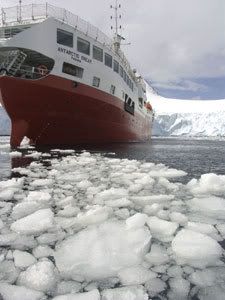
Antarctic Log

Cox & Kings' Latin America Product Manager Mark Crosby recently went on the trip of a lifetime to Antarctica. Here are his thoughts:

"If Antarctica were music it would be Mozart. Art, and it would be Michelangelo. Literature, and it would be Shakespeare. And yet it is something even greater; the only place on earth that is still as it should be. May we never tame it." Andrew Denton.

It’s hard to write a travelogue about a cruise to Antarctica without it sounding over-exaggerated. I could go on endlessly about how each day brought something different, each day there were surprises and each day threw up so many superlatives. So what I have tried to do instead is come up with a list of memories that I am sure will live with me forever. Sometimes they’re obvious, sometimes a little more personal. Please feel free to add your own comments and experiences to the list…or get down there yourself and make your own memories.

· Leaving Ushuaia down the lovely Beagle Channel. To port lies Argentina; to starboard, Chile. As the evening summer sun shines on green hills, we make introductions and enjoy dinner and wine as the signals disappear on the mobile. The real world will not exist for 10 nights.

·Trying to keep my eyes on the horizon in the infamous Drake Passage as the ship pitches and rolls slowly south, it feels like a roller coaster. Here the Atlantic and Pacific Oceans meet and a strong cold wind truly blasts the cobwebs away. I was concerned about being seasick but the worry disappears when a royal albatross flies so close to the ship I can touch her. The albatross follows, gliding behind and across the ship for hours and is a marvellous distraction from the endless ocean.

· A lecture on geology turning into a full-blown debate about the environment and whether tourists should go to Antarctica. One passenger declares that she would persuade people not to go to Antarctica, in order to preserve its pristine state. Another replies that you would probably do more damage to the continent everyday, just staying at home.


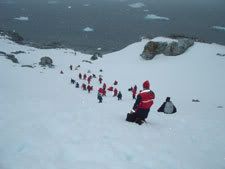
· The thrill of my first foot on the actual continent of Antarctica. The crew have done it hundreds of times before but they know what it means to us and they build the anticipation wonderfully.

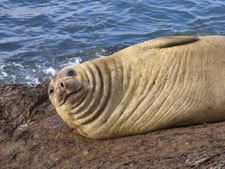
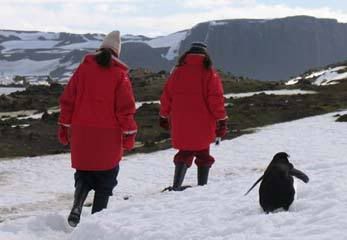
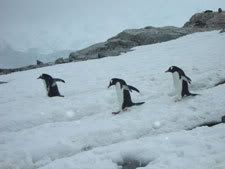
· Taking far too many photos of the scenery and wildlife. Everyone is amazed at how animals survive in these places. The penguins are always entertaining, the birds come so close to the ship and there is always a member of the crew poised in case of a whale alert.

· Having a few beers listening to some of the crew play Chilean folks songs (with a few verses of the Beatles thrown in) and looking out of the window to see the sun shining on an iceberg. It’s 2 o’clock in the morning.

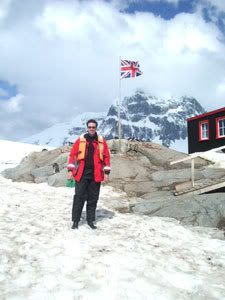
· Posting a few postcards home with Royal Mail stamps and paying in sterling at Port Lockroy. This is an old British base which has been restored to serve as a research station and museum. The union flag flies in a surreal location against beautiful white mountains and close to penguin and cormorant colonies. It was at this station that the research began which led to the discovery of the hole in the Ozone layer.

· Visiting an old whaling station is an eerie and fascinating reminder of the days of early exploration in the high latitudes. One of the crew has a football, so we manage a kick around on Antarctica - another unique day.

· Skirting the Antarctic Circle. The ice is too thick to proceed further, it is bitingly cold and the wind is high. It is here I realise a journey to Antarctica is not just a holiday, it’s a true adventure. Later in the season the guides say they will travel across the circle. We travel on land close to the circle where the snow is horizontal. I shelter on the rock and stared across the wilderness. Barely two feet away from me an Adelie penguin stops to take a look then continues its comical waddle toward the horizon.


· Hearing fascinating lectures on geology and wildlife and also the history of exploration to Antarctica. Then going for tea on deck, looking out into the wilderness and marvelling at how those early explorers like Shackleton, Amundsen and Scott and their teams managed it and how they must have felt. It is not until you get there that you appreciate the immenseness of the unforgiving, and beautiful, wilderness.

"No person who has not spent a period of his life in those 'stark and sullen solitudes that sentinel the Pole' will understand fully what trees and flowers, sun-flecked turf and running streams mean to the soul of a man." Ernest Shackleton

· Swimming at Deception Island, a collapsed volcanic caldera into which ships can navigate, albeit with great care. The waters in the bay are hot springs, and on the shallow shore you can bathe in the waters. Swim just 3 metres from the edge however and it’s icy cold. At least it’s good to get a true appreciation of Antarctic waters, and is probably good for the skin or something.

· Heading north back up Drakes Passage at around 1 am and the sun is slowly setting, although in early December it never truly sets. As it sets in the West I can see the first glimmers of light coming up in the East, a bizarre experience.

· Getting back on dry land after a wonderful journey, with a satisfied smile on my face.

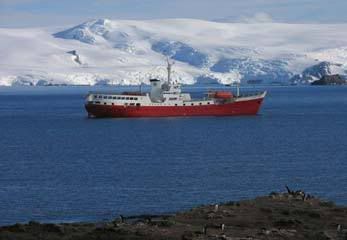
I travelled on the Antarctic Dream, a new Chilean vessel specialising in cruises in Antarctica and Patagonia. What I enjoyed about this was that it was a small ship (maximum 96 passengers) so there was more room for flexibility with the itinerary (essential with the unpredictable weather conditions of Antarctica) and we were able to stay longer ashore than passengers on larger cruise ships. There is an excellent international crew but the majority are Chilean. I found this a nice touch especially as we departed from South America and we were able to eat Chilean food, drink Chilean wine and cocktails and one evening listen to Chilean and Spanish songs played on an old guitar by the ship's naturalist and the crew. The passengers were also a cosmopolitan mixture; from all over Europe, North and South America, South Africa and Australia as well as Britain so it led to interesting dinner conversations. I was impressed with the experience and assurance of the expedition team and lecturers. They were always helpful, always ready to share a story and we all trusted them completely to get the most out of this once in a lifetime experience. The guides are all also very attuned to the environmental impact of travelling to Antarctica and ‘green issues’ in general. They have a convincing argument that controlled tourism to the continent and the ability to pass on knowledge and enthusiasm will be more beneficial to the environment than closing it off completely. Then, not only scientists, but the whole world, will be able to see the fragility of the continent and its wildlife.

Mark Crosby