Showing posts with label cox kings. Show all posts

Tuesday, April 29, 2008

The South Luangwa Valley: Zambia's Pot of Gold


The South Luangwa Valley (known locally as ‘The Valley’) in Zambia is one of Cox & Kings' fastest growing destinations. Previously overlooked, Africa Product Manager Louise Stanion (bottom right) explains what makes the area so exceptional.


The skies darkened ominously. The leaves on the trees were illuminated brightly against the black backdrop. A stillness in the air preceded a strong gust of wind and the first rumble of thunder sounded. The rainbow, which was weak and broken before, turned into a complete semi-circle of bright colour, similar to the sort you would see in a children’s drawing book. It was then that the elephants decided to step across the orange, dirt track. The matriarch first, followed by the younger ones. In slow, pre-historic motion they moved under the rainbow’s end and quietly disappeared into the bush beyond.


Bertrame, my trusted driver and guide, ran to the back of the van, hooting with laughter. The thunder was banging, the lightening was crashing and the heavens were emptying very wet rain onto us. I was too busy catching the rainbow spectacle on film as he held a poncho over my head.

Next we were hurtling through the bush trying to make it to our nearest hope of cover, Chichele Presidential Lodge, the former holiday retreat of President Kenneth Kaunda (or KK as he is locally known). The skies continued with their dramatic display, the trees being periodically lit up by the lightening, as we drove. I stuck my camera under my fleece and blinked the water away from my eyes. The scene was too spectacular, too exhilarating to miss.

Chichele Presidential Lodge was built in 1960 and has an elevated hilltop location giving it the best sweeping view of any lodge in the South Luangwa National Park. It is beautifully colonial with an impressive arched entrance. As our 4x4 drew up, I looked through to the terrace and saw polished floors, brass fans, hanging lanterns and a grand piano. I wondered how our sodden state would be received but in the true tradition of ‘The Valley’ we were welcomed with open arms and giggles. It turned out that Suku, the lodge manager, had previously worked with Bertram at Robin Pope Safaris. We were clearly in good hands as I was handed a complete change of warm, dry safari gear. Bertram immediately set about arranging our sun downer drinks and snacks on the Chichele terrace. The rain had passed and we were soon enjoying the view and recounting the day's adventure to the other guests.

This was my second visit in 5 years to the South Luangwa National Park. October 2004 found me ‘bush camping’ between two of Robin Popes Safaris most established camps, Nsefu and Tena Tena. At this time of year the heat was high and the trees had lost many of their leaves making the game viewing outstanding. ‘Bush camping’ is a fantastic way to go deeper into the bush. For anyone serious about walking, June to October is the best time to visit as the land is dry enough to open up to walkers.

My most recent visit, March 2008, was during the so-called ‘emerald’ season. Game viewing at this time of year is a whole different ball game but equally thrilling. ‘Emerald’ is a Sanskrit word meaning ‘green’. The view from the 20-seater plane as we landed at Mfuwe Airport confirmed to me the appropriateness of this label. The scene was a far cry from the dusty, brown images usually conjured up when the words African Safari are mentioned.


March and the ‘emerald season’ brings with it wonderfully colourful migrant birds as well as providing a brilliant chance of seeing wild dog (from mid-February to mid-March). I experienced 7 different wild dog sightings of 3 different packs. Game viewing is excellent as many of the lagoons are full so animals gravitate towards the higher ground. Lions as well as wild dog are often seen walking on the roads.

I started my trip as a guest of Norman Carr Safaris who have Kapani as their main safari lodge, plus four individually designed bush camps. Norman (1912 – 1997) first pioneered Zambian walking safaris in the 1950’s and his legacy is Norman Carr Safaris where conservation and care of the local community remain a priority.

I was met by my guide Abraham (left). Quietly spoken and with over 15 years bush experience, Abraham is charming and infectiously enthusiastic about nature. Abraham also has the nose of a professional who knows the area like the back of his hand.

Within 24 hours of setting our 4x4 wheels into the South Luangwa National Park we had seen all of the following scenes:


From Kapani we travelled two hours by boat upstream to Mchenja, the only bushcamp in the South Luangwa to stay open during the ‘emerald’ season. Access during this time is by boat only and although short walks can be done, the majority of game viewing is done from the water. It is a serene and peaceful experience to watch wildlife from a boat. We saw lions lazing on the bank, elephants swimming, crocodiles sprinting into the water, hippos yawning and spectacular cloud formations, especially at sunset.


Mchenja Camp is situated right on the banks of the Luangwa River. It is a small, intimate camp with just 5 very stylish tents, each one under its own thatched roof. There is an outdoor shower and a large stand-alone bathtub. There is a small pool alongside the bar within the thatched main chitenje, allowing guests to seek cool refuge during the heat of the day. During the ‘emerald season’ it makes an excellent combination with Robin Pope Safari’s Nkwali Camp (ask one of our Africa specialists about the 7-night ‘Rivers & Rainbows' package), the last stop on my visit.


The big bonus of this camp is its brilliant access to the South Luangwa National Park. During the dry season it is possible to walk across the dry riverbed and into the park itself. Elephants regularly make the same journey and often come to the waterhole near the thatched dining room. This can be seen, in comfort, from the bar! During the ‘emerald season’ a boat can be taken from just below the bar straight to a land rover waiting on the other side of the river in the park.


During my stay I was fortunate enough to be adopted onto a David Rogers Photographic Safari for a couple of days. A keen amateur, often lucky in terms of ‘right place, right time’ but with little technical know-how, I was well aware of my lack of expertise. However, David’s easy going approach to photography and passion for African wildlife and landscapes immediately relaxed everybody. It very soon became clear why David travels to this area during the ‘emerald season’. The occasional sharp, short and dramatic downpour settles the dust. The spectacular skies and clouds produce an excellent light for photographing the animals. Another extra plus is that the green vegetation makes for some colourful and unusual images.


With just 6 people in the group, everyone is able to benefit from David’s expertise, whether they have a point and shoot or a snazzy SLR. I learnt about the ‘rule of thirds’ when it comes to composition and ‘panning’, a technique that involves moving the camera with the subject so
that it appears sharp against a streaking, blurred background. I soon found myself clicking away with interest and ease.


The evenings, on a specialist safari such as this, were also fun. After supper each person showed his or her best 5 pictures of the day. Sitting on the Nkwali deck, sipping herbal tea (gin & tonic for some) and watching the big screen playing back the adventures of the day was, in my book, unbeatable!


The South Luangwa Park is not just about animals. What impressed me most about our safari partners in this area (Norman Carr Safaris and Robin Pope Safaris) is that the local community is integral to the smooth running of the operation. It is Zambian guides who are likely to take you on your game drives, trained up over 20 years or more to an excellent standard. Both operators actively support a local school (Yosefe and Kawaza Schools) and both use Tribal Textiles (beautiful individually painted cotton fabrics, this company employs 150 local people and fund-raises for the local community school, Malimba, educating over 160 children) to kit out the interiors of their camps. This area has the feel of everyone working together rather than in competition. A visit to one of the schools and to Tribal Textiles is ‘must-do’ of any trip to ‘The Valley’.

Access to the South Luangwa is quick and seamless. A 10-hour direct Overnight flight into Lusaka, followed by a short 2-hour hop in a 20-seater Aircraft and a 40-minute drive to either Kapani or Nkwali.


Zambian smiles will greet you and remain by your side throughout your stay. The hospitality I found here was second to none. Each individual’s needs, how ever quirky, were catered for with good humour. You can’t help but come away a happier person for the experience.

The only challenge that remains is how to maintain this level of contentment in the South-East of England commuter belt!


Cox & Kings offers a 7-night Robin Pope safari in Zambia from £2737 per person and can also arrange tailor-made tours throughout the region. Call 020 7873 5000 to speak to one of our expert Africa consultants.

Tuesday, June 05, 2007

Green Guyana

Online Marketing Executive Michael Pullman travelled to Guyana, a country that welcomes just 2000 tourists per year, and found a developing destination that is challenging but rewarding to those with a keen sense of adventure.

I travelled to Guyana recently with a small group of tour operators on a familiarisation trip and found a clean, welcoming country rich in wildlife and with a variety of stunning landscapes. However, what impressed me most was the way tourism was developing. Many people have jumped on the eco-tourism bandwagon recently, to the extent where the label has become almost meaningless, but not in Guyana: nearly all the lodges we stayed in were built from locally sourced materials, run in co-operation with local communities and serving locally-grown produce, ensuring not only that tourism has a minimal environmental impact but also that local communities reap the benefits. Whilst the accommodation in some areas is basic, and you may have to share it with the odd creature (one night one of our group had a large spider, a bird and a frog as room-mates) the pristine rainforests, colourful wildlife and beautiful scenery more than make up for this.

In the centre of Guyana lies the Iwokrama Forest, which covers 1 million acres of rainforest, and which was granted as a gift to the international community by the President of Guyana in 1989. Administered by a collection of international forestry agencies, the Iwokrama Rainforest is a living model showing how tropical rainforests can be conserved and sustainability used to provide ecological, social and economic benefits to all. There is very little logging in Guyana, the region has a healthy jaguar population, and with the tourism industry developing slowly and responsibly Guyana is something of a model for eco-tourism

So knowing you can come here with a clean conscience and be sure your tourist dollars are making a difference, here are some of the highlights of my trip:

The Giant River Otters at Karanambu Ranch. Karanambu Ranch is the home of Diane McTurk, well known for her work rehabilitating orphaned Giant River Otters before releasing them to the wild. Guests can sometimes swim with the otters, although we decided not to take our chances with the four resident otters when we visited (below).


An evening boat trip on the Rupununi River. The owners of Karanambu Ranch look after their guests very well; after a lunch of Moussaka and apple crumble (the sweet puddings of Guyana are a hangover from the British colonial era) we headed out for an afternoon boat trip on the Rupununi. The river is home to magnificent birdlife but the highlight for me was the covering of giant lily pads, which you can observe flowering as dusk falls. We watched this nature show with generous amounts of rum punch, made by our onboard barman, before heading back to the ranch under a blanket of the clearest stars I have ever seen.

Kaieteur Falls: In the two hours we toured Kaieteur Falls we saw three other tourists. The Falls are spectacular in scale, the largest single drop falls in the world, but unlike most major waterfalls there is no souvenir shop, café, or even handrail separating the tourist from the flowing water.


Surama Village: The fact that Guyana is English-speaking means visitors can really interact with the locals. At Surama we visited the primary school where we took part in perhaps the largest hokey cokey Guyana has ever seen, after listening to the students sing a song about Surama (see below).


Rock View Lodge: Rock View Lodge has plenty of obvious assets: The refreshing swimming pool; the extensive vegetable gardens providing fresh ingredients for the fantastic food; the warm and friendly staff; the range of activities on offer; and the magnificent setting where the savannah meets the jungle. What I liked above all was the fact that Rock View is a focal point of the charming villages surrounding the lodge. Schoolchildren pass by on their way to school. Locals drink in the lodge’s Dakota Bar. Whilst here I took a ten minute walk to the charming village of Annai and watched an inter-village football game take place against a stunning setting on the plains of the savannah.

Becoming a twitcher
: I’m not about to start spending weekends in hides birdwatching in the UK, but I couldn’t help but become interested in the colourful birds of Guyana, and by the end I knew my yellow rump from my white throated toucans (left).

Wally Prince: Our guide at Iwokrama Field Station, Wally Prince, responding to our calls for a closer look at a three-foot cayman by fishing it out of the water with his bare hands during a night time boat trip.

The Trip: Visit Guyana on our 11-night Guyana Experience tour. For more information on Guyana visit Wilderness Explorers, our agents in Guyana.

Tuesday, April 10, 2007

Uzbekistan

Thomas Saunders, one of our Middle East/India experts, recently travelled to Uzbekistan, in the heart of central Asia. Here, he writes about his experiences.

12 March
It was only yesterday that I was packing a bag for the beginning of an adventure into Uzbekistan. How far from normal life can an overnight flight take you, I pondered, as I arrived at Tashkent. I was in central Asia, an area of the world I had no expectations of.

In the arrivals area of Tashkent airport I met my driver, Rashid, and my guide for the next 10 days, Marina. Marina spoke excellent English as well as Uzbek, Russian and German.

On leaving the airport I requested we find somewhere for me to change my sterling into local currency. With an exchange rate of 2400 soms to the pound I walked out of the bank with five thick bundles of cash, feeling like a bank robber.

The Fergana valley is a fertile plain surrounded by the Kyrgyzstan Mountains of Chatkal and the Fan Mountains of Tajikistan. To get to this unique part of Uzbekistan we drove high into the snow-capped mountains. The roads twisted and turned as we came close to the Kamchik Pass.

The first city we came to was Kokand, one time capital of Fergana. From 1709 – 1876, Kokand was the capital of Kokand Khanate, a territory that included a large part of present day Uzbekistan, part of southern Kazakhstan, Kyrgyzstan, Tajikistan and southern China. Kokand is considered to be the second religious centre in Central Asia, after Bukhara. There were 35 madrasahs (Arabic schools) and hundreds of mosques in Kokand city, which were mainly built during the reign of Khudoyar Khan. In Kokand we visited the famous Khudoyar Khan’s Palace, Juma Mosque and Dahmai Shahon (Grave of Kings).

After Kokand and the tiring overnight flight we had a two-hour drive onto Fergana, to the Asia Hotel.

13 March

Andijan is the most strictly Islamic city of Uzbekistan. Here we took lunch at a traditional café, where we sat on what appeared to a bed with a raised table in the middle, rather like a hospital bed, which we sat on, cross-legged. We ate the traditional dish plov. Whilst I thought it was nice and hearty, my guide insisted that Khiva plov was better, not because she is from Khiva but because they use less fat. After lunch we made a brief visit to the small Babur museum. Babur was born in Andijan and was famous for founding the great Moghul Empire in India. You can read a fascinating book retracing Babur’s walk across Afghanistan here.

We then visited a mosque that is now unused and seemed to have a factory placed in the middle of it - a good example of the Uzbek government’s attempts to undermine the Islamic extremism in this area. Opposite the mosque was the lively and fun bazaar. This was the highlight of the day for me; Uzbeks have no shops and do all their shopping for food and clothes in bazaars. As such there is very little commercialism on display in the Fergana Valley. It’s refreshing to be away from advertising hoardings and branded goods.

We drove back to Fergana and found a local restaurant to have dinner. Rashid my driver had brought some marble sized balls of very sour cheese that he insisted would taste nice when eaten with beer. I tried this, but still found them sour and only slightly more palatable.

14 March

Today we headed for a silk factory, a key indication I was on the great silk route. I was treated to a tour of the silk factory and now have a vague understanding of the silk production process. Particularly impressive were the men dipping and turning huge piles of silk into pink dye.

After this we headed back to Fergana to collect our bags before my flight to Tashkent. The plane was miniscule; we entered though the undercarriage, carrying our own luggage on, which we stored on a rack at the back. We all squashed ourselves in and the plane took off. I spent the night at the impressive and very modern Tashkent Palace.

15 March

Today we headed out to the Chimgan mountains that form the foothills of the Tian Shan range, which stretches into China. This is a scenic and popular area of Uzbekistan, where locals visit in the summer to escape the oppressive heat of Tashkent, and in the winter for skiing.


16 March

This morning we began our four hour drive to the UNESCO site of Samarkand. After checking into a hotel bursting with old Uzbek character with intricate woodwork on the doors and ceilings, we headed into Samarkand for an afternoon visit to the Guir Amir Mausoleum, the burial place of the great warrior Timur, who is very much revered in Uzbekistan. This was a very impressive sight and my first chance to gaze upon a blue tiled dome, the like of which I had only seen in brochures and books.

17 March

Today I woke to find Samarkand soaked by rain, and dark rain clouds hung overhead as we started out on our sightseeing. First we visited the Afrosiab, a museum dedicated to old Marakanda, the old name for Samarkand before the mongols destroyed it. Alexander the Great had said “Everything I have heard about Marakanda is true except that it’s more beautiful than I ever imagined”. With these words in mind, it’s a pity nothing remains. Next we visited Uleg Beg’s observatory, or rather what is left of it, which isn’t much. However, the small museum made me appreciate the great scientific works the Muslims in the 15th century had accomplished. Uleg Beg was a great astronomer himself, and gathered the great minds of the Islamic world to Samarkand during a very fruitful time for the city.

We then visited Shahr I Zindah, a series of mausoleums from Timur’s time. Despite my guide’s negative attitude to the restoration work I enjoyed this site immensely. Here you could see Persian and Uzbek architecture next to each other and understand the differences in style and technique. Both styles were hugely impressive and I wandered the narrow lane between the mausoleums gazing at the portals, the Uzbek ones in sky blue with geometric patterns and the Persian in dark blue with floral patterns.

After this, we headed to one of the most impressive sites in central Asia, Registan Square. The Square comprises three madrasahs, all facing inwards to create three walls of a room around a large square. Unfortunately at this point the heavens opened and we were forced to take shelter in one of the madrasahs.

18 March

I woke up to a clear sunny day and took another visit to Registan Square, which looked even more impressive bathed in sunlight. Afterwards we headed out of Samarkand and onwards to the town of Bukhara, another UNESCO World Heritage site.


19 March

In Bukhara we took a walking tour and visited nearly all the sites on foot. The first site was Bukhara’s oldest and for me had very interesting links to Zoroastrianism, the 3000-year-old religion that was once dominant in the region but now has fewer than 200,000 follower worldwide.

It was wonderful to walk around Bukhara’s old centre visiting the many mosques and madrasahs, all in varying degrees of restoration and beautifully-built from the old sand coloured mud brick and topped with blue domes. Many of the ruined madrasahs have been turned into souvenir shops, selling beautiful rugs in the classic Bukhara style.


That evening we took dinner in one of the local restaurants where we were served the usual salads, soup, and meat, with a plate of round bread. During dinner, Rashid produced a photograph of his family and explained how his daughter was getting married and that this had been arranged by his wife. Arranged marriages are still very much part of Uzbek culture.

20 March

Today we spent most of the day in the car driving out across the Kyazaklum Desert heading toward Khiva.

The highlight of the day apart from gazing across the vast desert was lunch, taken at a roadside café. Whilst very rustic, the café was near the only river that ran into the desert and as such they had a pool of water with fresh fish. Rashid selected one, which was scooped out and promptly fried for us. We ate this with the fruit and vegetables we had bought yesterday and it made a fantastic meal.

Upon arrival in Khiva the place felt slightly deserted; however, at the back of the hotel, the staff were gathered around a large pot with boiling water. Apparently they were cooking a dish that takes 24 hours to prepare. I was lucky to be there when a group of local dancers and musicians took up a tune and danced opposite the pot.


21 March

Today we drove out to the ruins of Topraq-Qala and Ayaz-Qala. The drive out was most exciting as we crossed a pontoon bridge, that looked like it was in the last stages of dereliction but proved to be strong and a popular way across the mighty Oxus river. The land was dramatically barren with large deposits of salt. Climbing the ruins offered impressive views and I enjoyed the seclusion of these forts. After lunch and a drive back to the hotel, Rashid left us bode me farewell. I was sad to see him go as he had been a great driver and companion on this trip.

22 March

Today we took a full day sightseeing tour of Khiva. Unfortunately for me it rained on and off for most of the day, but despite the rain Khiva still shone through, showing me a glimpse of its one-time magnificence. The huge minaret of Kalta Minor left me wondering how high it would have been had it been finished. Khiva, another UNESCO site, is a town of minarets and domes, spread amongst a collection of old sandstone buildings in the middle of the desert, and one of the best ways to view the town is from a high place. I sought out Islam-Huja Minaret and paid the Uzbek lady sitting at its entrance for the opportunity to climb its stairs to the top. Inside the minaret, the stairs spiralled upwards and in a very small and claustrophobic space I made my way to the top of this high minaret. From the top I was rewarded with great views of the town below.

This evening I took a flight back to Tashkent where I would spend my last day.

23 March

I spent my last day in sun-soaked Tashkent, visiting the city’s lively Bazaar, which was the biggest I had been to and the centre of much activity for bargain hunters. Next we visited a working madrasah before heading to the Islamic Art Museum, home to a range of artefacts from all over Uzbekistan, which offered a nice reminder of all the places I had visited.

After more traditional Uzbek food for lunch I booked tickets for a ballet at the opera house opposite my hotel. Being only 30% full I had a wide choice of seats when I entered. I settled into an enjoyable performance of Tomisi, a ballet set in Persia, and afterwards packed my bag ready for my flight back to the UK.

24 March

I left the hotel happy that I had seen so much of Uzbekistan, and with the feeling that one day I should return to explore more of this fascinating part of the world.

Explore Uzbekistan on Cox & Kings' 8-night Uzbekistan: Heart of Central Aisa tour.

Friday, March 02, 2007

Going Oriental in Prague


Cox & Kings' Online Marketing Executive Michael Pullman stayed at the new Mandarin Oriental Hotel in Prague last weekend.

With Prague already offering a Radisson, a Marriott, a Four Seasons and a number of independent five-star hotels such as the Hotel Savoy and the Golden Well, you may think the city needs another exclusive hotel like it needs another spire. Yet the Mandarin Oriental group obviously thinks there is the market for more, investing heavily in building a new hotel in the heart of the city’s Old Town, which opened in November 2006.

The Mandarin Oriental is built on the site of an old monastery, and this becomes apparent in the labyrinth-style layout of the hotel. The opening of the hotel was delayed by two years due to ongoing excavation of this important 14th century site, and whilst this must have caused annoyance to the group’s accountants the hotel itself benefits from a nice display of artefacts discovered during the renovation.

The rooms themselves are what you would expect from a Mandarin Oriental: there’s a bed that could house a small town; a bathroom with more mirrors than Stringfellows; a coffee-table-sized flat screen television; and an entrance foyer, all finished with the same dark wood imported from the Far East.

Location-wise, the hotel couldn’t be much better, being on one of Prague’s quiet cobbled streets but very much in the thick of things, just a five-minute walk from the main tourist site, Charles Bridge, and a short but gruelling walk up the hill to Prague Castle.

This was my first visit to Prague, and if I’m honest I was half-expecting the city to be overrun with drunk stags, but fortunately this wasn’t the case. There were groups of lads to be seen, but no bad behaviour beyond a few half-hearted football chants echoing around the city’s small cobbled streets.

Apparently 7 million tourists visited Prague in 2006, and it is Europe’s 6th most visited city. But given that it really is as beautiful as everyone says, together with the low cost of living and the famed nightlife, that is not surprising. Yet being off-season when we visited, the sites were relatively quiet, including Prague Castle, which is a stunning complex and worth the uphill trek.

Aside from sightseeing, my favourite part of the weekend was visiting some of the atmospheric local bars and restaurants. Many of these places look unchanged for centuries, one restaurant we ate at was typically decorated with a rather odd collection of ornaments, old photos and medieval swords, creating a peculiar atmosphere, that felt like eating in an antiques shop. Eastern European cuisine is derided but on a cold day a plate of goulash and bacon dumplings washed down with a litre of beer was ideal.

For an afternoon drinking I can particularly recommend the Golden Tiger, a rather spartan, smoky beer hall, which may be too authentic for some people’s taste but which serves the best beer in Prague according to one drinker. Distinguished drinkers at the Golden Tiger include Bill Clinton (left). Whilst the shared tables mean you will probably end up plonked next to a group of locals enjoying an afternoon session, we discovered it’s best not to try and keep up with them.

As most people are aware, the Czechs take their beer seriously. Whilst Staropramen and Budvar are available almost everywhere in the UK now, Prague offers an excellent array of dark beers and light beers varying in strength up to 13%. The locals we spoke to considered Pilsner Urquell to be the best lager. Either way it all starts to taste the same after a while and is a great way to unwind after walking, which is something you can do plenty of in Prague. With most of the key sights being navigable on foot it has everything one could want from a short break destination.

Michael Pullman

With Cox & Kings offering 3 nights at the Mandarin Oriental for the price of 2 until the end of March, now is an excellent time to savour the latest addition to the city’s luxury hotel sector.

Tuesday, January 30, 2007

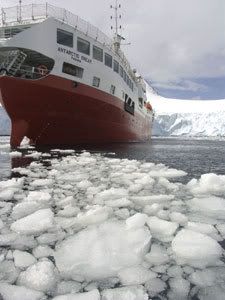
Antarctic Log

Cox & Kings' Latin America Product Manager Mark Crosby recently went on the trip of a lifetime to Antarctica. Here are his thoughts:

"If Antarctica were music it would be Mozart. Art, and it would be Michelangelo. Literature, and it would be Shakespeare. And yet it is something even greater; the only place on earth that is still as it should be. May we never tame it." Andrew Denton.

It’s hard to write a travelogue about a cruise to Antarctica without it sounding over-exaggerated. I could go on endlessly about how each day brought something different, each day there were surprises and each day threw up so many superlatives. So what I have tried to do instead is come up with a list of memories that I am sure will live with me forever. Sometimes they’re obvious, sometimes a little more personal. Please feel free to add your own comments and experiences to the list…or get down there yourself and make your own memories.

· Leaving Ushuaia down the lovely Beagle Channel. To port lies Argentina; to starboard, Chile. As the evening summer sun shines on green hills, we make introductions and enjoy dinner and wine as the signals disappear on the mobile. The real world will not exist for 10 nights.

·Trying to keep my eyes on the horizon in the infamous Drake Passage as the ship pitches and rolls slowly south, it feels like a roller coaster. Here the Atlantic and Pacific Oceans meet and a strong cold wind truly blasts the cobwebs away. I was concerned about being seasick but the worry disappears when a royal albatross flies so close to the ship I can touch her. The albatross follows, gliding behind and across the ship for hours and is a marvellous distraction from the endless ocean.

· A lecture on geology turning into a full-blown debate about the environment and whether tourists should go to Antarctica. One passenger declares that she would persuade people not to go to Antarctica, in order to preserve its pristine state. Another replies that you would probably do more damage to the continent everyday, just staying at home.


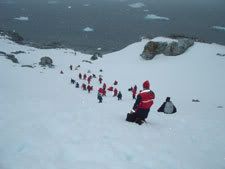
· The thrill of my first foot on the actual continent of Antarctica. The crew have done it hundreds of times before but they know what it means to us and they build the anticipation wonderfully.

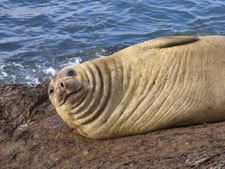
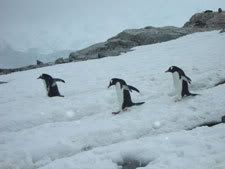
· Taking far too many photos of the scenery and wildlife. Everyone is amazed at how animals survive in these places. The penguins are always entertaining, the birds come so close to the ship and there is always a member of the crew poised in case of a whale alert.

· Having a few beers listening to some of the crew play Chilean folks songs (with a few verses of the Beatles thrown in) and looking out of the window to see the sun shining on an iceberg. It’s 2 o’clock in the morning.

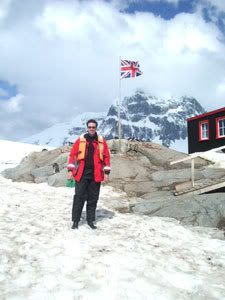
· Posting a few postcards home with Royal Mail stamps and paying in sterling at Port Lockroy. This is an old British base which has been restored to serve as a research station and museum. The union flag flies in a surreal location against beautiful white mountains and close to penguin and cormorant colonies. It was at this station that the research began which led to the discovery of the hole in the Ozone layer.

· Visiting an old whaling station is an eerie and fascinating reminder of the days of early exploration in the high latitudes. One of the crew has a football, so we manage a kick around on Antarctica - another unique day.

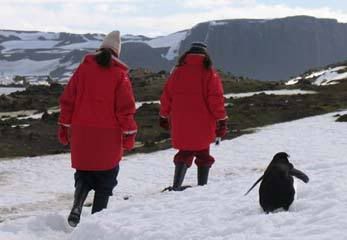
· Skirting the Antarctic Circle. The ice is too thick to proceed further, it is bitingly cold and the wind is high. It is here I realise a journey to Antarctica is not just a holiday, it’s a true adventure. Later in the season the guides say they will travel across the circle. We travel on land close to the circle where the snow is horizontal. I shelter on the rock and stared across the wilderness. Barely two feet away from me an Adelie penguin stops to take a look then continues its comical waddle toward the horizon.


· Hearing fascinating lectures on geology and wildlife and also the history of exploration to Antarctica. Then going for tea on deck, looking out into the wilderness and marvelling at how those early explorers like Shackleton, Amundsen and Scott and their teams managed it and how they must have felt. It is not until you get there that you appreciate the immenseness of the unforgiving, and beautiful, wilderness.

"No person who has not spent a period of his life in those 'stark and sullen solitudes that sentinel the Pole' will understand fully what trees and flowers, sun-flecked turf and running streams mean to the soul of a man." Ernest Shackleton

· Swimming at Deception Island, a collapsed volcanic caldera into which ships can navigate, albeit with great care. The waters in the bay are hot springs, and on the shallow shore you can bathe in the waters. Swim just 3 metres from the edge however and it’s icy cold. At least it’s good to get a true appreciation of Antarctic waters, and is probably good for the skin or something.

· Heading north back up Drakes Passage at around 1 am and the sun is slowly setting, although in early December it never truly sets. As it sets in the West I can see the first glimmers of light coming up in the East, a bizarre experience.

· Getting back on dry land after a wonderful journey, with a satisfied smile on my face.

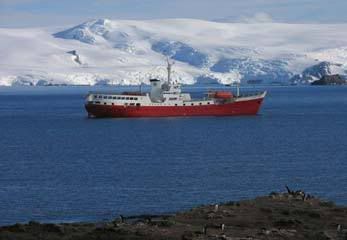
I travelled on the Antarctic Dream, a new Chilean vessel specialising in cruises in Antarctica and Patagonia. What I enjoyed about this was that it was a small ship (maximum 96 passengers) so there was more room for flexibility with the itinerary (essential with the unpredictable weather conditions of Antarctica) and we were able to stay longer ashore than passengers on larger cruise ships. There is an excellent international crew but the majority are Chilean. I found this a nice touch especially as we departed from South America and we were able to eat Chilean food, drink Chilean wine and cocktails and one evening listen to Chilean and Spanish songs played on an old guitar by the ship's naturalist and the crew. The passengers were also a cosmopolitan mixture; from all over Europe, North and South America, South Africa and Australia as well as Britain so it led to interesting dinner conversations. I was impressed with the experience and assurance of the expedition team and lecturers. They were always helpful, always ready to share a story and we all trusted them completely to get the most out of this once in a lifetime experience. The guides are all also very attuned to the environmental impact of travelling to Antarctica and ‘green issues’ in general. They have a convincing argument that controlled tourism to the continent and the ability to pass on knowledge and enthusiasm will be more beneficial to the environment than closing it off completely. Then, not only scientists, but the whole world, will be able to see the fragility of the continent and its wildlife.

Mark Crosby

Thursday, November 02, 2006

Mongolia: The Last Great Wilderness

Far East Consultant Marie-Louisa Lowther travelled to Mongolia in June 2006.
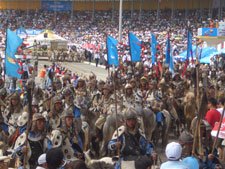
The great beast of an ox pulls the sturdy cart, upon which sits a small replica of a traditional 'ger'. The president takes prime position on a frontal platform. The procession is led by more than a hundred Mongol horses which seem oblivious to the clapping and cheering. The cavaliers are dressed in traditional armour and costume imitating that originally worn by Genghis' great army.

This opening ceremony of the Nadaam Festival was the first real highlight of our tour. The Mongolian cultural highlight of the year, it is a 3 day festival which takes part at the beginning of July. It started in the 12th Century before the time of the great ruler. The festivities were banned during the Soviet era however the event began again once the Russians left Mongolia. It is a festival of three male sports: wrestling, horse racing and archery, to show who is the strongest and the best. Ultimately it praises their great hero.

Otherwise known as Chinggis, or 'Great Ruler', Genghis Khan lived from 1162 to 1227. A great warrior, his real name was Temuchu (iron man). Considered so terrifying, many cities surrendered upon mere rumours of his impending invasion, as his army trampled Asia and beyond. In 1206 he reunited all of the Mongol tribes to create one of the largest empires ever to exist. Today he lives on as a symbol of Mongolian independance and democracy.

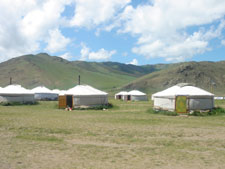
After an introduction to the city we ventured into the vast great wilderness of Mongolia and the gobi desert for 8 days and nights, to ty to get a glimpse of the traditional nomadic way of life. 43 percent of Mongolians still live as nomads in gers which are easy to build, dismantle and restore. Camps are moved twice a year to cope with seasonal change. During the mild summer months nomads travel to flatlands near to a water supply, and in September to a valley or by a mountain to shelter from the harsh winter.

Tourist ger camps are designed to replicate this way of living to
a certain extent. Although fairly basic, the camps are surprisingly clean and comfotable, powered either by solar power or a generator. Collapsible cedarwood frames are covered by sheep's wool felt, with a central stove and carpeted wooden floor. In the evenings the Mongolian camp staff serve a hearty meal of grilled lamb and dumplings, and entertain with the haunting sound of 'hoomi' throat singing.

For the most part bathroom facilities are shared, but some camps are building 'deluxe' gers which have a self contained wooden cubicle attached to the side. In one camp we experienced an infestation of harmless beetles which took residence in our gers, they could be heard dropping to the floor in the night. After the rain there was a distinct smell of goat which in fact was the smell of damp felt. Minor distractions these were though. Nothing compares to waking up to see farmers herding their livestock, the lush green meadows beyond and vivid blue skies: a landscape which could resemble that of utopia.

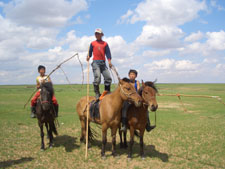
The Gobi is a land of extremes. Decent rain only falls every two or three years, it can be well over 40 degrees in the summer and below minus 40 degrees in the winter. Storms of dust and sand are fearsome in spring. We travelled off road in comfortable jeeps, our experienced drivers seemed to have inbuilt compasses in their heads there were certainly no signposts. Our vivacious guide Ari, whose knowledge of the area was outstanding, enthused us all the way. Regular stops allowed us to enjoy the scenery and relieve ourselves. (There are no porterloos in the dessert, any modesty was quickly overcome out of sheer necessity). As we travelled further south the scenery changed and so did the wildlife. As well as sand dunes and red cliffs and arid desert we saw green valleys, steep mountains, small farms and nomadic herds. Yaks resembling big fluffy cows drank out of ponds as horses bathed in rivers and an ox and cart passed by.

Other unusual wildlife we saw along the way included bearded vultures (the largest flying birds in the world), enormous wild rams, ibexes, camels (an entertaining time was had when we had a chance to ride these), and the' takhi' horse. The only remaining breed of wild horse in the world, these were re- introduced into the Hustain Nuruu National Park during the 1960s after nearly becoming extinct. Resembling zebras without stripes, the animals are sandy coloured with black manes and tails, and look almost prehistoric.

Possibly the most fascinating of all the sights are the Bayanzag Flaming Cliffs, which were discovered in 1922 by American explorer Roy Andrews Chapman. The scenery resembles that of Arizona and here is one of the best places in the world for palaeontology. A red sandstone area, bones literally stick out and whole dinousaur eggs lie on the ground. A complete dinosaur model, the bones of which were all found at Bayanzag, is kept in the splendid museum of Natural History in Ulaan Baatar.

A few monasteries survived Stalin's purges. Remains exist in Karakorum, the ancient capital of the Mongol empire. Originally one of the biggest cities on the original Silk Road, it was eventually completely destroyed and material from the ruins was used to build the fabulous Erdene Zu monastery. The beautiful Gandan Monastery in Ulaan Baatar also survived, since the Russians used it to stable their horses.
Mongolia has to be seen to be beleived. Mild stomach ache brought on as a result of drinking airag (fermented mares milk) and being stuck in the desert for an hour whilst our jeep was fixed all added to the experience. The rewards of the trip cannot be put into words. Now is really the time to visit, before the inevitable concrete roads and luxury camps appear.
Marie-Louisa Lowther